
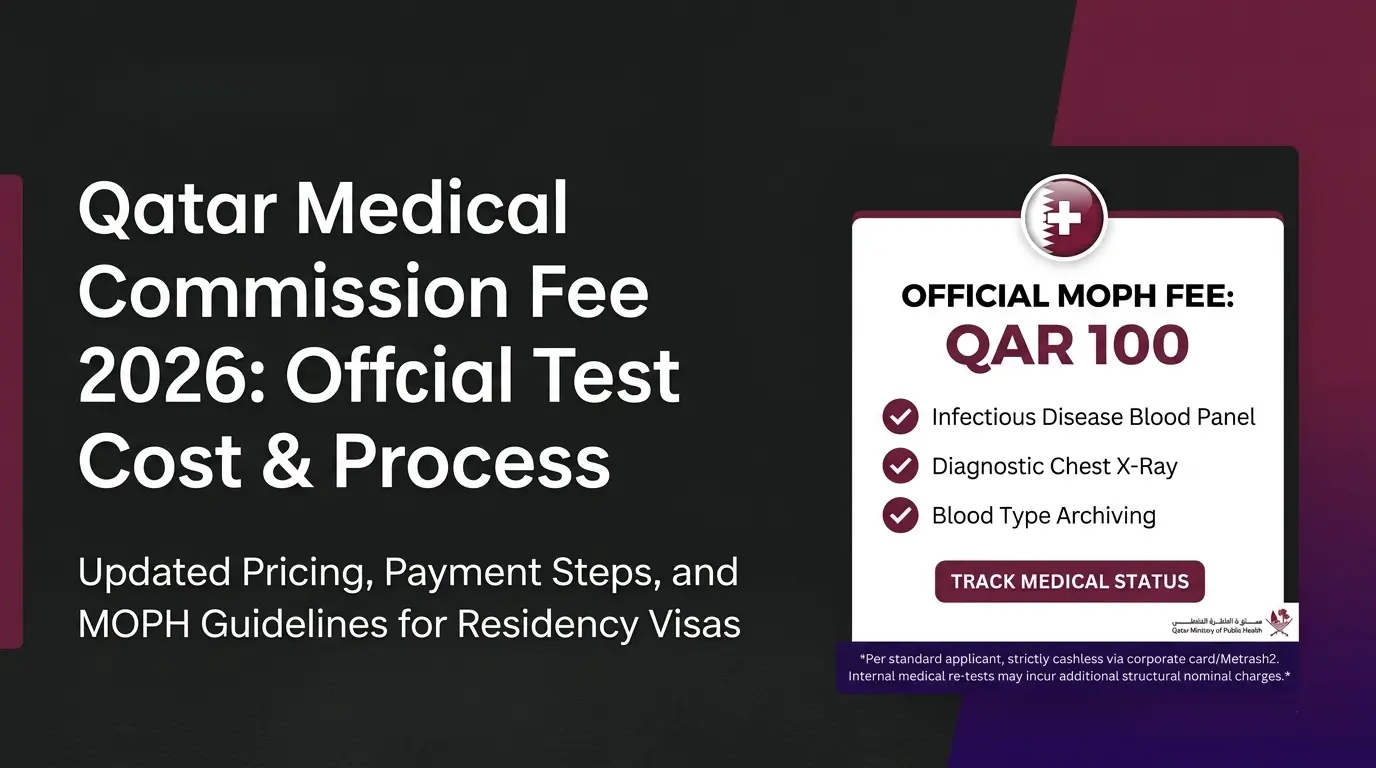
If you’re moving to Qatar for work, one step you can’t skip is paying the Qatar medical commission fee for the mandatory screening required to convert your entry visa into a residency permit (QID). This test is run by the Ministry of Public Health (MOPH), mainly at the Abu Hamour facility, and checks for a handful of specific health conditions before you’re cleared for long-term residency.
This is a completely separate process from your regular health card or public healthcare registration. If you’re trying to check your public hospital registration instead, that’s covered in our Qatar health card check guide. If you’ve just come from your pre-departure biometric appointment abroad, this in-country medical test is typically your next step after Qatar Visa Center appointments.
How Much Is the Qatar Medical Commission Fee?
The standard fee is a flat QAR 100 per applicant, and it applies the same way whether you’re general labor, domestic staff, or a white-collar professional. This is worth knowing when budgeting for the wider process, especially alongside the Qatar visa medical test new rules for 2026, which cover the updated pre-departure requirements.
This fee is separate from any agency service charges you might come across when using a recruitment company, so it’s worth asking your employer or PRO to confirm exactly what you’re being billed for if a quoted amount looks higher than QAR 100. It’s a common complaint, some employers or agents quote QAR 300–400 and call it a ‘processing fee. Always ask for the official receipt showing the QAR 100 government charge, that way you know exactly what you’re paying for.
Payments are handled electronically only, through the MOPH system, using a credit, debit, or corporate card. Cash isn’t accepted at the facility. If you’re a corporate PRO handling this for an employee, it’s worth confirming the entry permit is valid first with a quick MOI Qatar visa check.
What’s Actually Included in the QAR 100 Fee
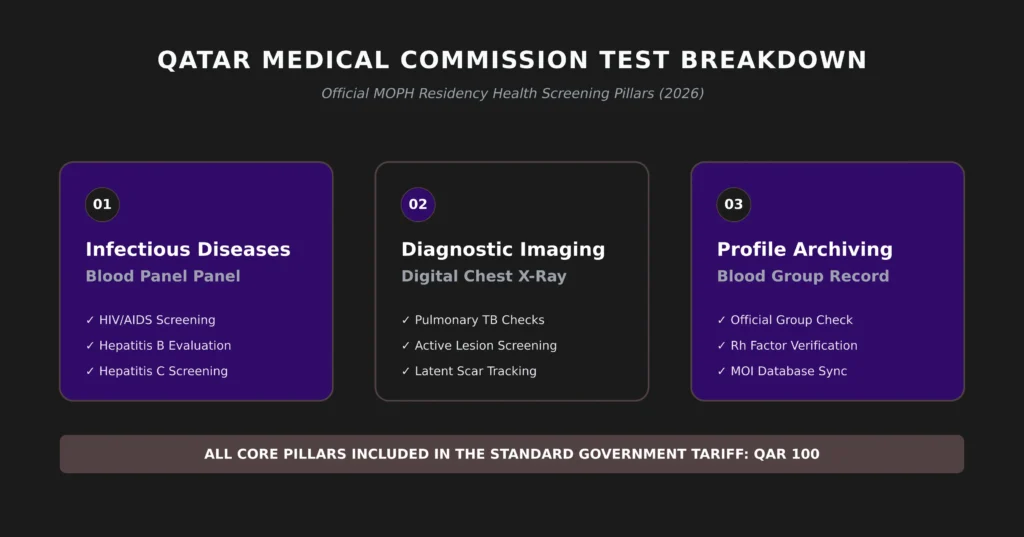
Under Qatar labor law, this cost is the employer’s responsibility, not the worker’s. The base fee covers the full initial screening package:
- Infectious disease panels: Blood tests for HIV, Hepatitis B, and Hepatitis C
- Chest X-ray: To check for active or past tuberculosis
- Blood type recording: Officially logged as part of your medical file
If your initial results come back borderline or unclear, MOPH may ask for follow-up testing, additional lab work or imaging. These extra tests usually come with a small separate fee, which again falls on the employer to cover.
Tracking Your Results
Once your samples are processed at Abu Hamour, results get uploaded and securely shared with the Ministry of Interior’s immigration system. It’s genuinely worth checking in on this rather than just waiting, since a smooth handoff between MOPH and MOI is what keeps your residency process moving. Our guide on how to check your Qatar visa medical report status walks through exactly how to do this and what each status update means.
Fee & Testing Overview
Frequently Asked Questions
Why does my status show “Under Review” or “Incomplete”?
This usually means the lab needs a second look at something, often scar tissue on a chest X-ray or a blood sample that needs re-culturing. It doesn’t automatically mean you’ve failed; it just means you’ll likely need to return to Abu Hamour for a follow-up test.
Is the QAR 100 fee refundable if the applicant fails the screening?
No, it’s a non-refundable processing fee. If a new visa application is filed later, a fresh fee applies for the new screening.
Can the fee be paid in cash at Abu Hamour?
No, only card payments (credit, debit, or corporate) are accepted at the facility. Cash isn’t an option under MOPH’s current payment policy.